Momofuku
Momofuku · 2026
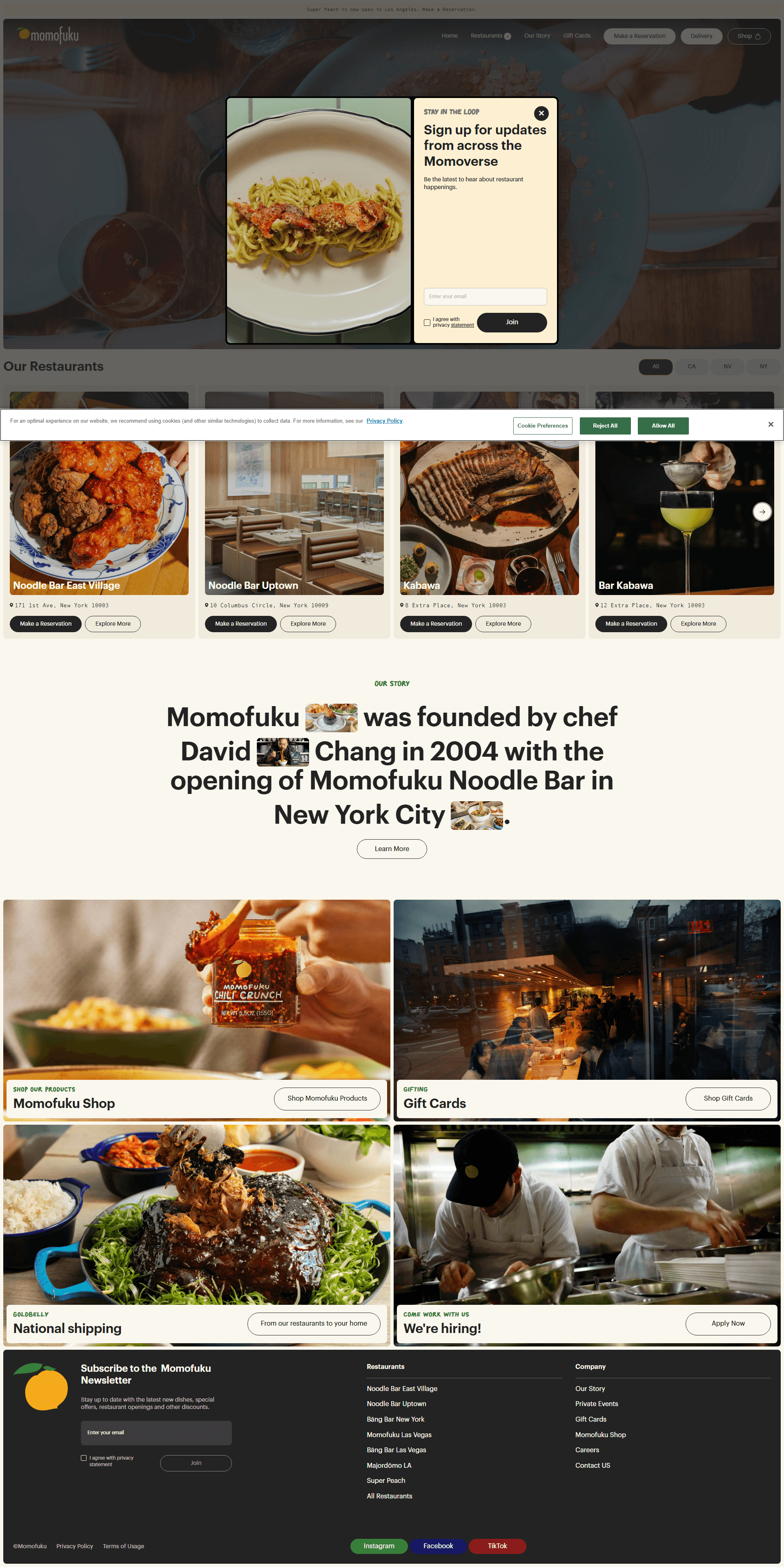
Momofuku is food culture at the highest level — David Chang’s restaurant group spans fine dining, fast casual, and a consumer goods line, each expressing the same philosophy of relentless culinary invention. Their website needs to feel as intentional as their food: warm but never casual, editorial but never pretentious, appetizing without resorting to the clichés of food photography. This turned out to be our cleanest capture in the entire portfolio — a 100% asset success rate that became our benchmark for pipeline performance.

Culinary Design Language
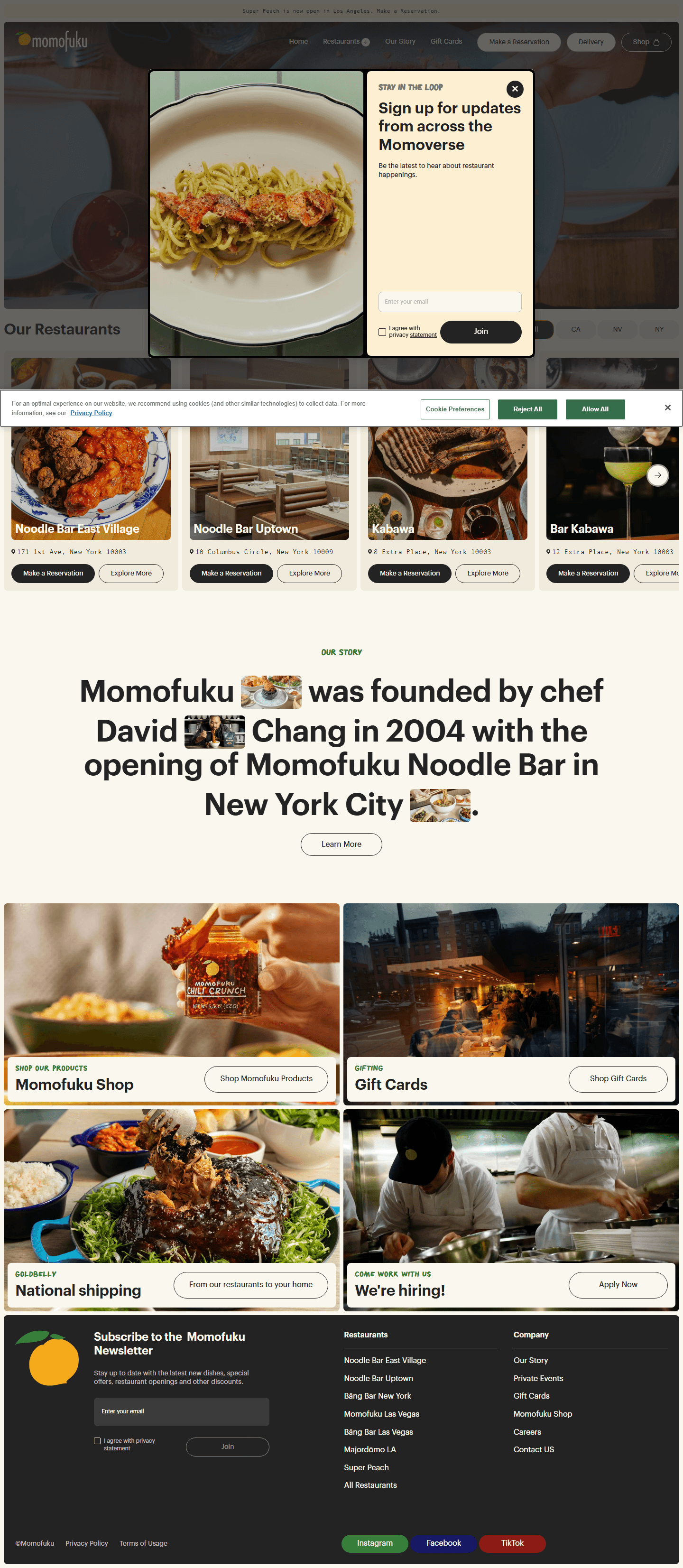
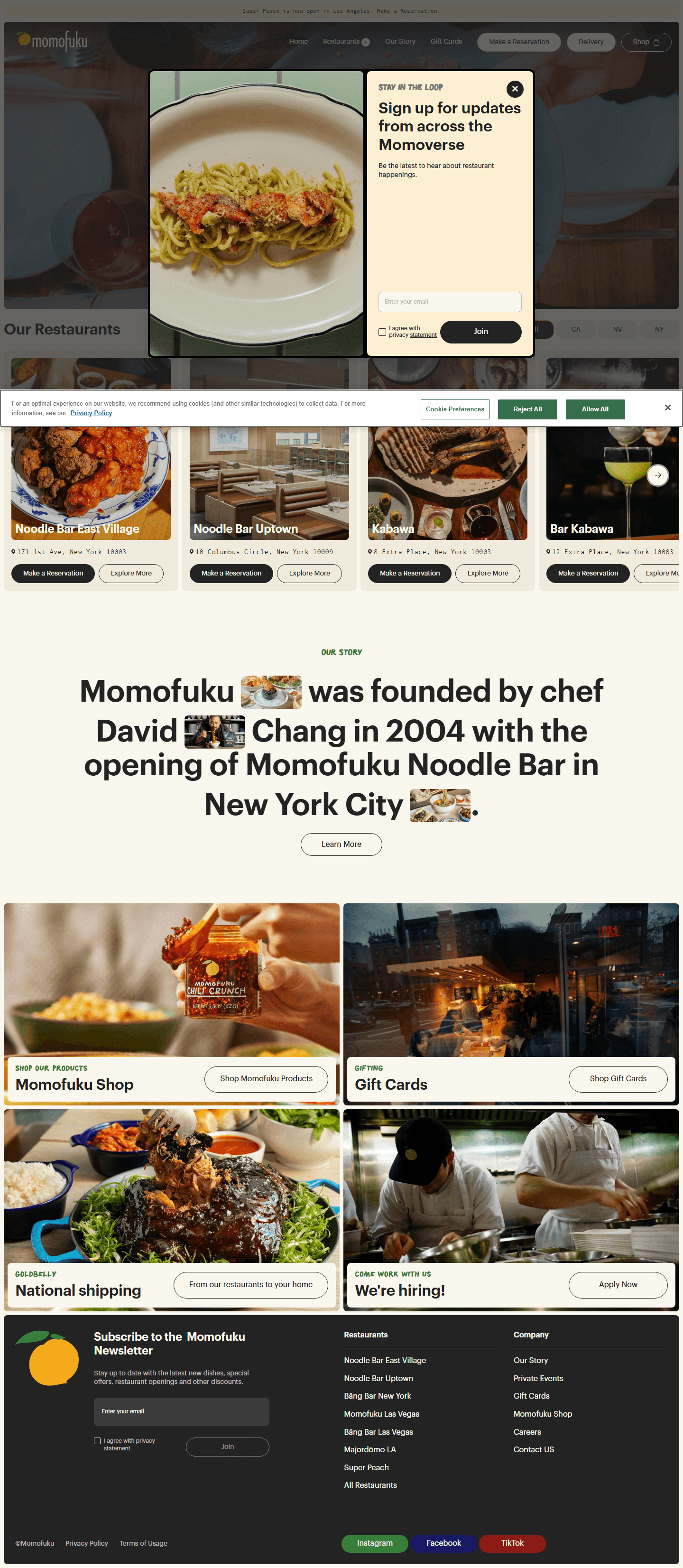
Momofuku’s visual identity is built on warmth — warm photography, warm tones, warm typography that feels handcrafted without being precious. The food photography avoids the sterile overhead shots that dominate restaurant websites; instead, images are shot at table level with natural light, capturing the steam rising from a bowl of ramen, the char on a piece of ssam pork, the imperfect beauty of hand-pulled noodles. Every image makes you hungry, which is the only metric that matters for a restaurant site.
The color palette centers on deep reds and warm neutrals — the Momofuku red (#C8102E) appears in navigation elements and CTAs, grounding the brand identity without competing with the food photography. Typography walks a careful line: modern enough to signal that this is a contemporary dining experience, but with enough character to distinguish Momofuku from the sea of minimal restaurant websites that all look like they were designed by the same agency.
What’s most impressive is the navigation architecture. The site must serve multiple audiences simultaneously — diners looking for reservations, fans browsing the editorial content, wholesale customers shopping for chili crunch and soy sauce. Each pathway feels natural, never forced. The restaurant-specific pages prioritize location, hours, and reservation links without burying the storytelling that gives each venue its personality. It’s a masterclass in information hierarchy for a multi-concept hospitality brand.


The Perfect Capture
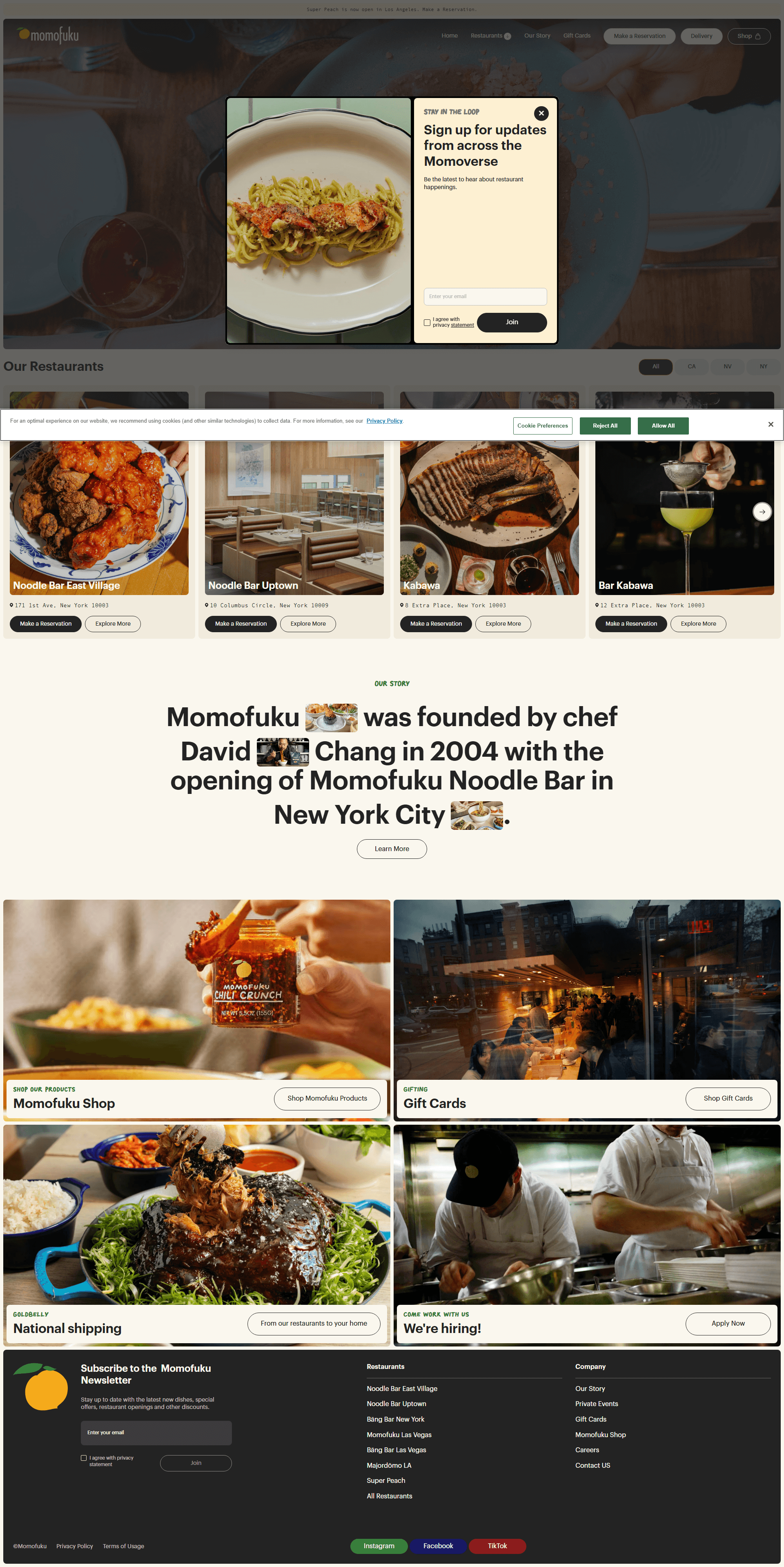
Momofuku holds a special place in our portfolio: it’s the only site we’ve captured with a 100% download success rate on the first pass. 49 assets identified, 49 assets downloaded — no retries, no failures, no rate limiting. 5 CSS files, 4 font variants, 26 inline SVGs for icons and UI elements, and 14 images that capture the warmth and energy of Chang’s restaurants.
The technical explanation is straightforward: Momofuku uses server-rendered HTML with a clean, well-structured DOM. No client-side rendering framework generating dynamic content, no lazy-loaded images hidden behind JavaScript intersection observers, no WebGL hero sections requiring canvas screenshots. The assets are referenced in standard HTML tags with predictable URL patterns from a single CDN domain. Our pipeline was built for exactly this kind of architecture.
This capture became our internal benchmark — the reference point for what a clean copy looks like. When we encounter a challenging site like OpenAI or Kernel, we compare the output against Momofuku’s fidelity. It demonstrates that our pipeline’s core logic is sound; the complexity comes from the increasingly creative ways modern frameworks obscure their assets behind JavaScript abstraction layers. Server-rendered HTML remains the gold standard for static capture, and Momofuku proves it.


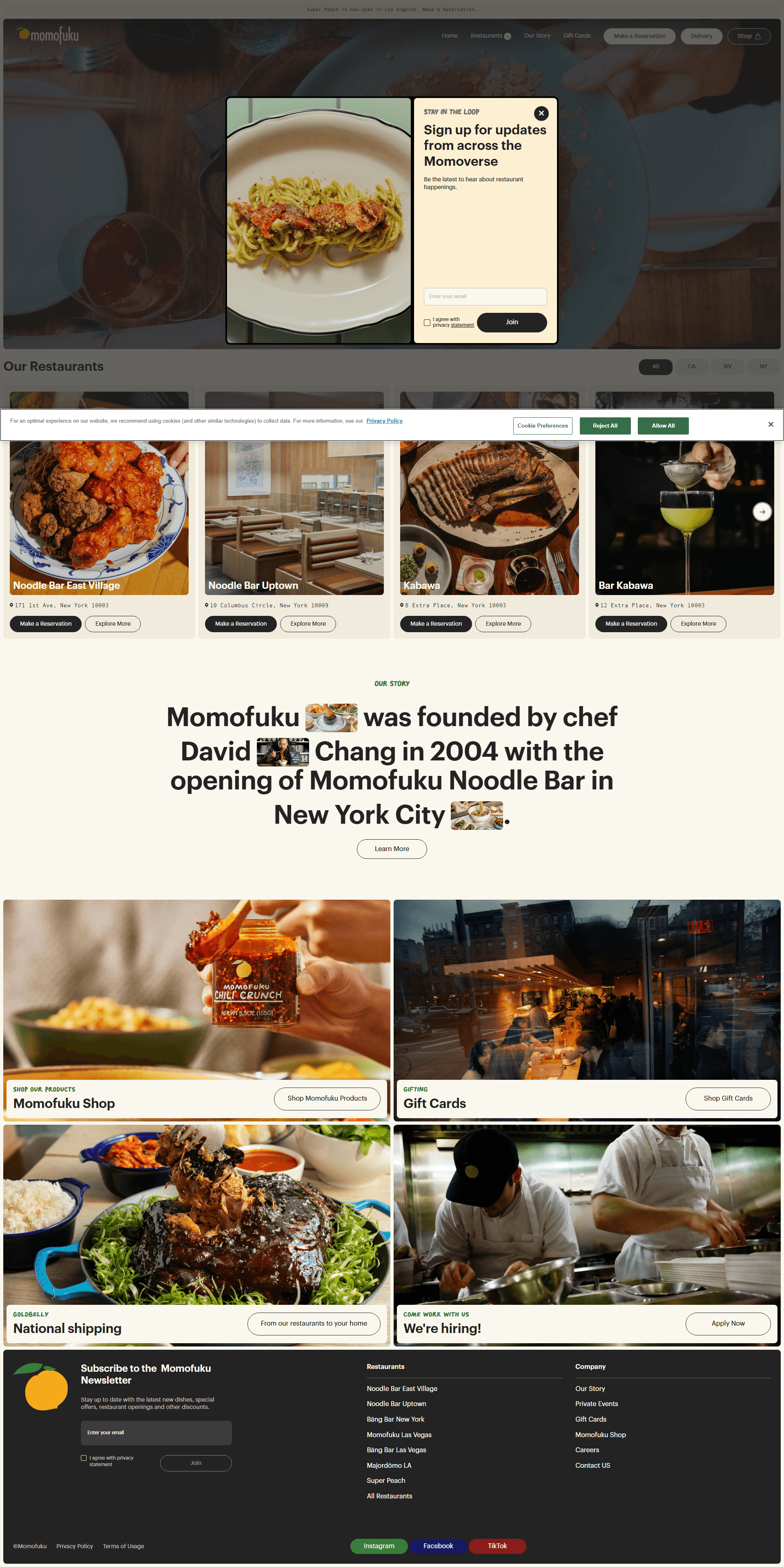
A perfect capture demonstrating our pipeline at its best — 49/49 assets downloaded without a single failure, preserving Momofuku’s warm photography, considered typography, and the editorial design language that makes a restaurant group feel like a cultural institution.