Balenciaga
Balenciaga · 2026
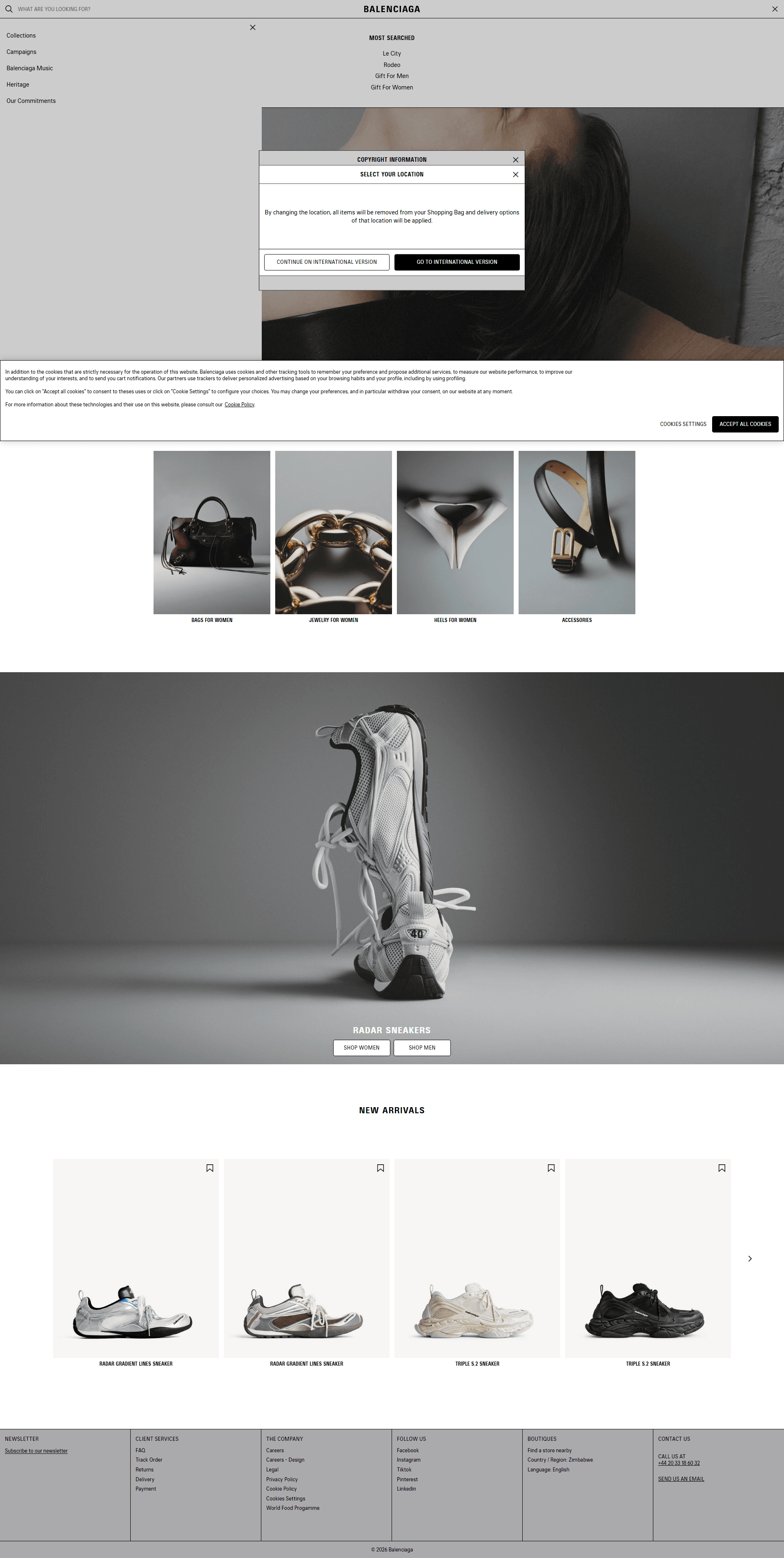
Balenciaga is fashion's most provocative digital presence — a house that treats its website as an extension of its runway provocation rather than a conventional e-commerce platform. The site sits at the intersection of editorial and commerce, with heavy lazy-loading, product carousels, and all imagery served through Kering's Digital Asset Management CDN. The design is intentionally stark, almost hostile in its minimalism. The challenge: capture an e-commerce experience where the restraint is the point, and where every missing image breaks the entire visual argument.


Anti-Fashion Design
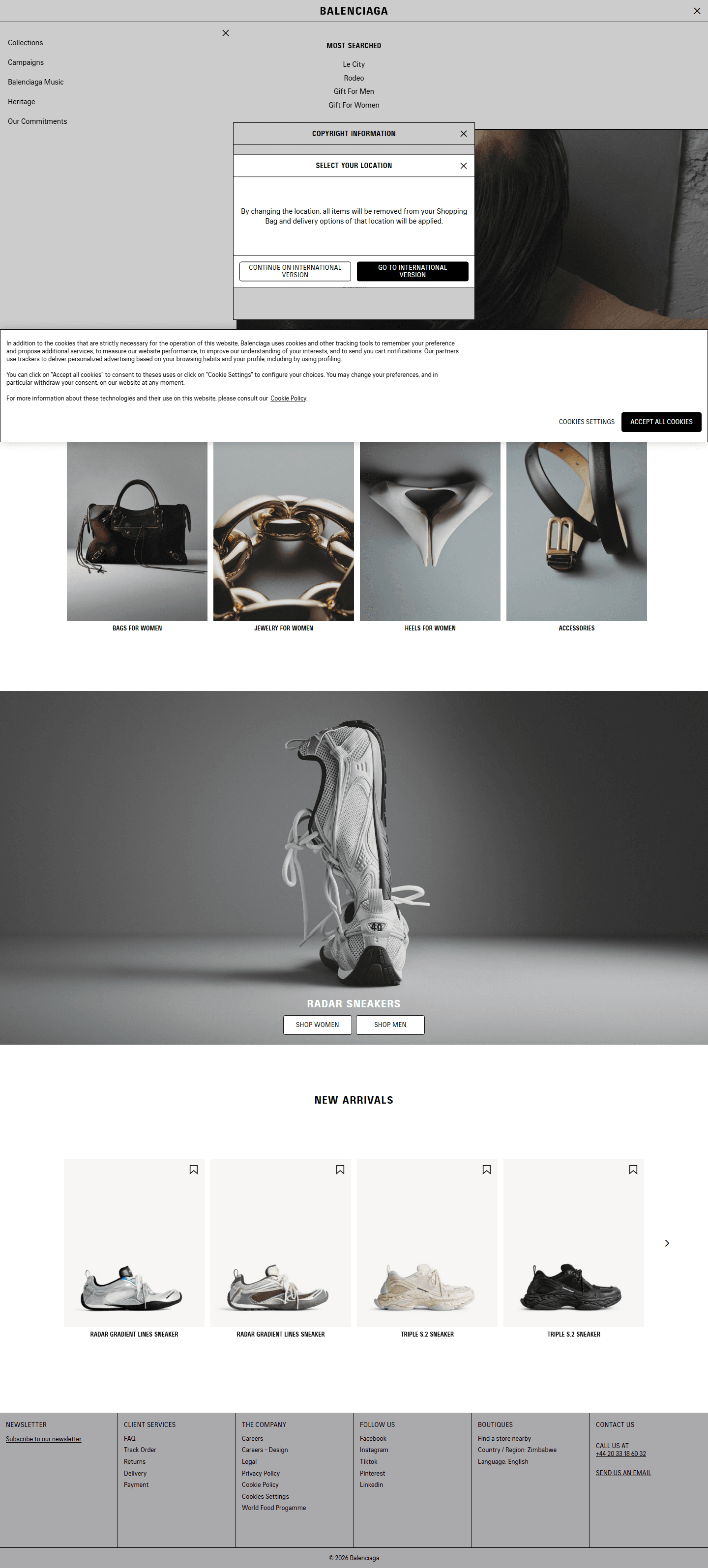
Balenciaga's web design operates by negation. Where luxury competitors layer on serif typography, rich photography, and aspirational lifestyle imagery, Balenciaga strips everything back to near-brutalist minimalism. The typography is a single sans-serif family rendered in all caps at modest sizes — no decorative flourishes, no italic variants, no typographic hierarchy beyond bold and regular. Text is functional rather than expressive, serving as navigation and product identification rather than storytelling.
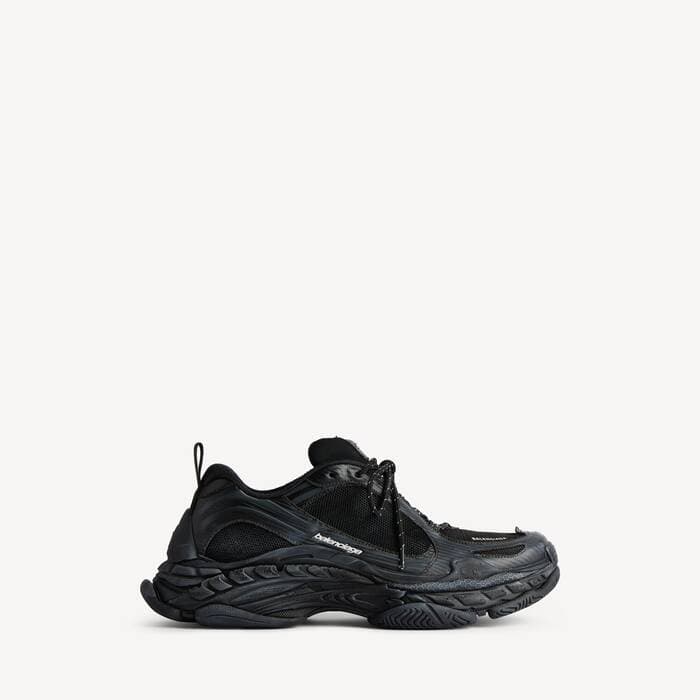
The layout is product-forward to an almost aggressive degree. Full-bleed product images dominate every viewport, separated by minimal padding and zero decorative elements. There are no lifestyle shots of models in exotic locations, no brand manifestos, no editorial features. The products exist on white or near-white backgrounds in clinical isolation — a deliberate inversion of the aspirational warmth that defines traditional luxury marketing. The message is clear: the product is the statement, and any design embellishment would dilute it.
This restraint IS Balenciaga's brand position. Under Demna's creative direction, the house has consistently used anti-design as provocation — from intentionally "broken" runway presentations to deliberately crude campaign imagery. The website extends this philosophy into digital space. The tension between luxury price points and brutalist presentation creates a cognitive dissonance that is entirely intentional. Capturing this site meant understanding that every pixel of empty space, every missing animation, every refusal to engage in conventional luxury web design is a deliberate creative choice that must be preserved exactly.


E-Commerce Complexity
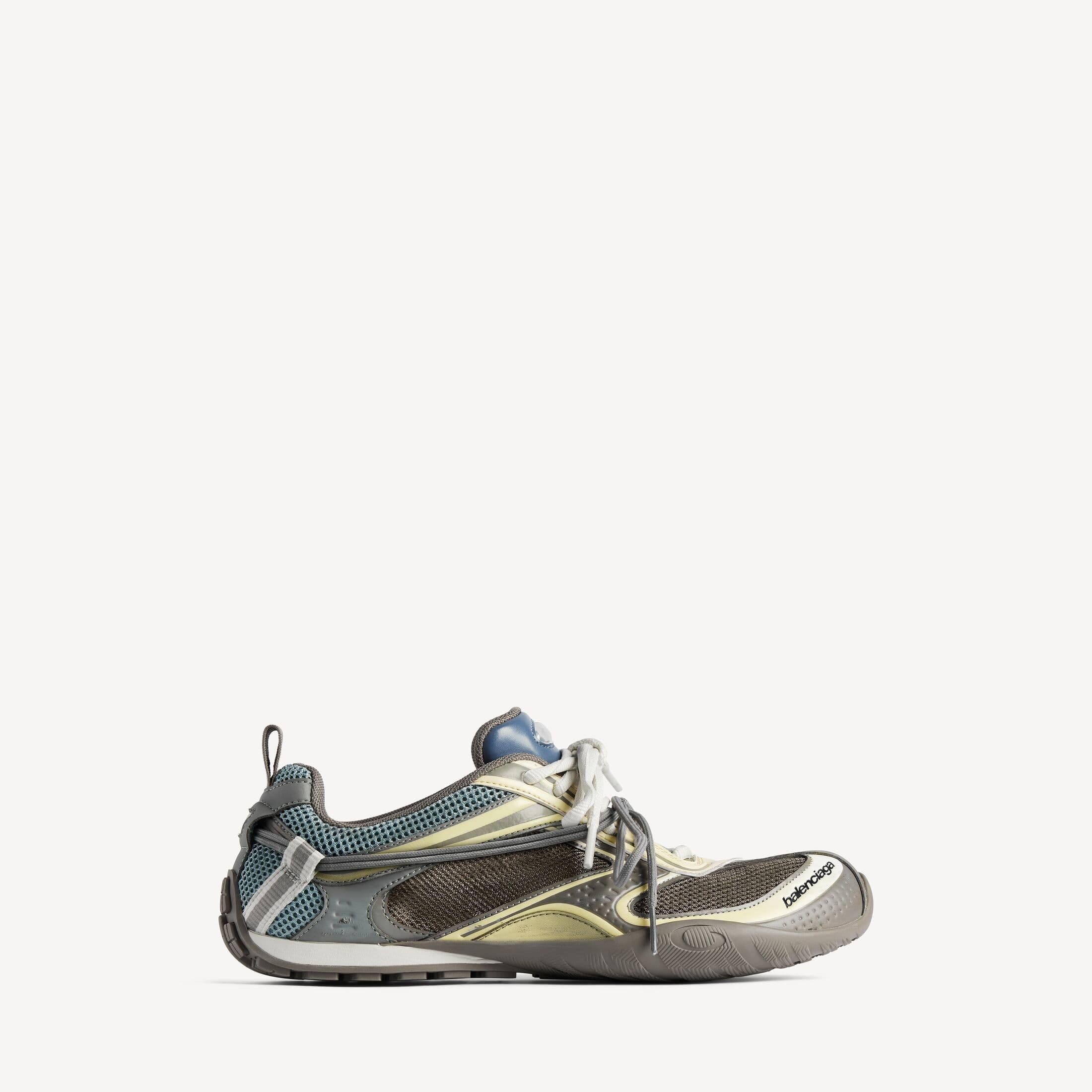
Beneath Balenciaga's minimal surface lies the full complexity of a Kering Group e-commerce platform. All product imagery routes through Kering's Digital Asset Management CDN — a centralized system that serves assets for Gucci, Saint Laurent, Bottega Veneta, and the rest of the Kering portfolio. The CDN URLs follow a proprietary structure with transformation parameters for size, format, and quality, which meant our auto-detection logic needed to identify the Kering domain as the primary image source rather than filtering it as third-party infrastructure.
The lazy-loading implementation is aggressive. Product images use blur-up placeholders — tiny, heavily compressed preview images that crossfade to full resolution as the viewport scrolls into range. Our scroll simulation had to proceed slowly enough to trigger each intersection observer threshold, wait for the high-resolution swap to complete, and then capture the final state. Rushing the scroll produced a page full of blurred thumbnails instead of crisp product photography.
Product carousels added another layer of complexity. Each product card contains multiple angle views that only load on hover or swipe interaction — states that our automated scroll couldn't trigger naturally. We captured the default first-angle view for each product, resulting in 67 total images that represent the storefront in its browsing state. The final capture preserves the stark, product-forward experience that defines Balenciaga's digital presence — proof that e-commerce architecture, no matter how complex under the hood, can be reduced to its visual essence without losing the brand's intent.
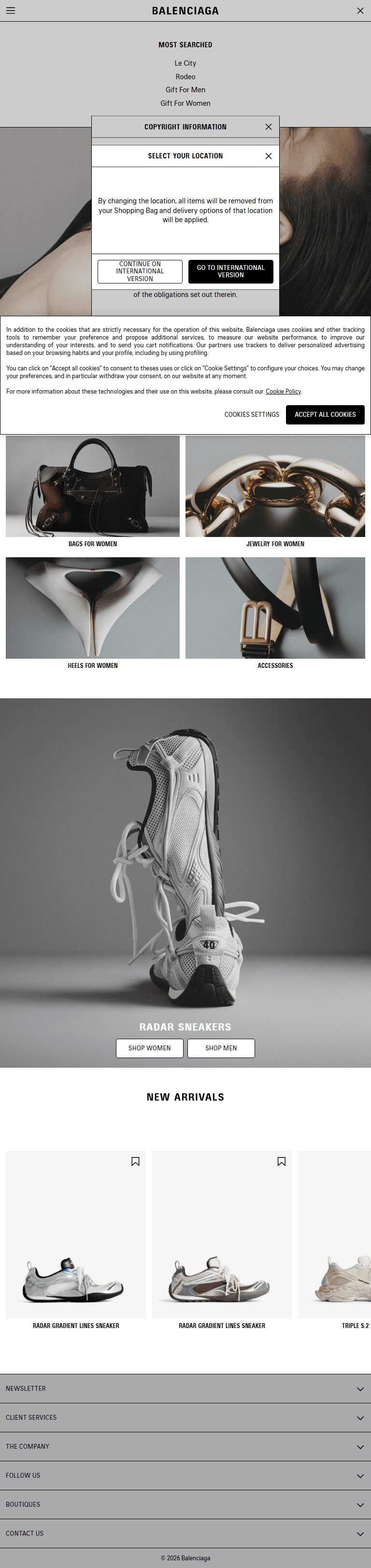



Captured the luxury e-commerce experience with full product imagery — 67 images from Kering's DAM CDN, lazy-loaded content triggered through scroll simulation, and product carousels preserved in their expanded state.