Kernel
Kernel · 2026
Kernel sits at the frontier of neuroscience hardware — a company building brain-computer interfaces that measure neural activity with the precision of an fMRI but the portability of a helmet. Their website must communicate genuinely complex BCI technology through elegant, scientific design that doesn’t alienate either neuroscientists or potential investors. The Gatsby-based architecture added a layer of technical challenge: rate-limited asset delivery meant our standard capture pipeline hit a wall of 69 failed downloads on the first attempt.

Neurotech Aesthetics
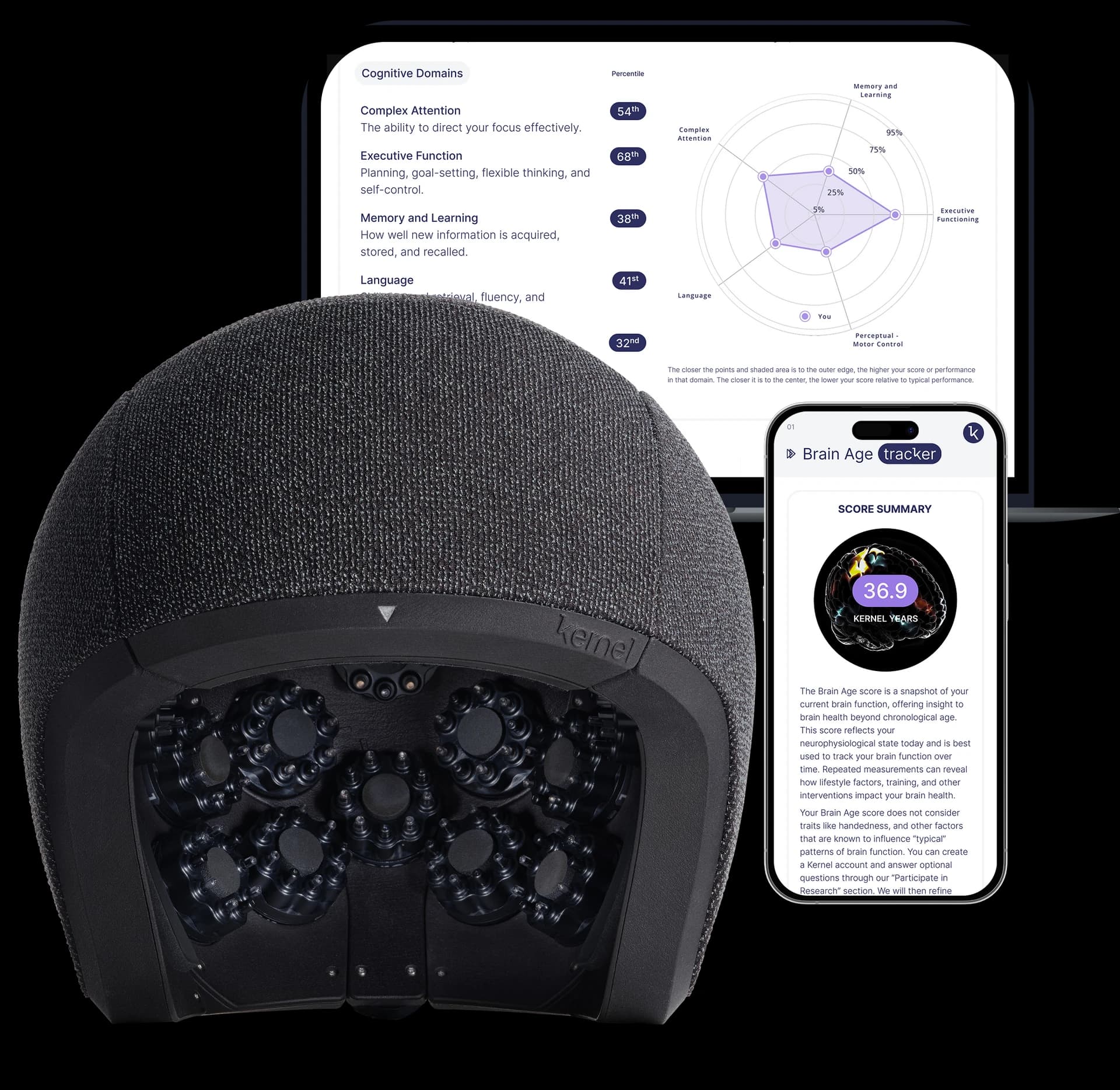
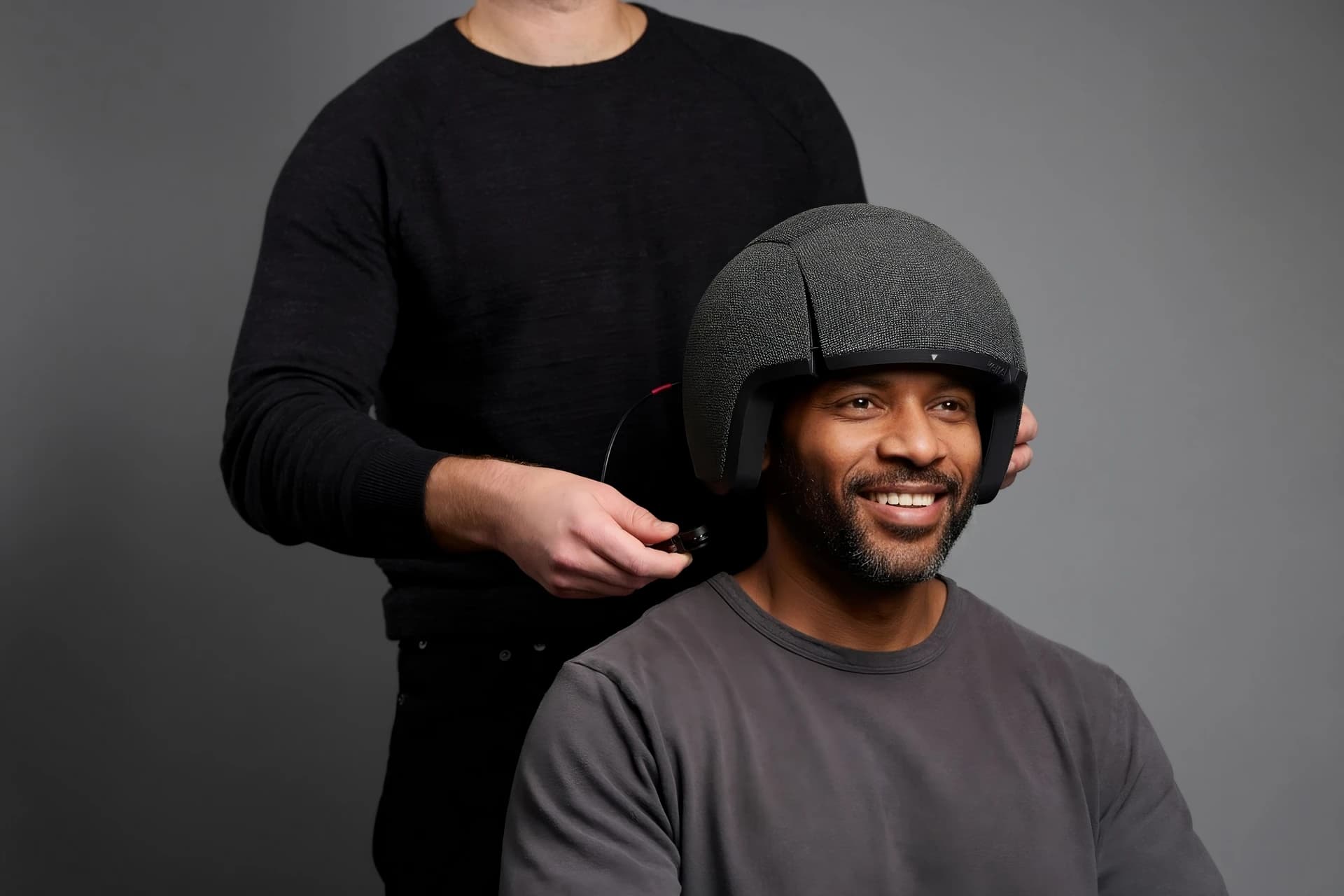
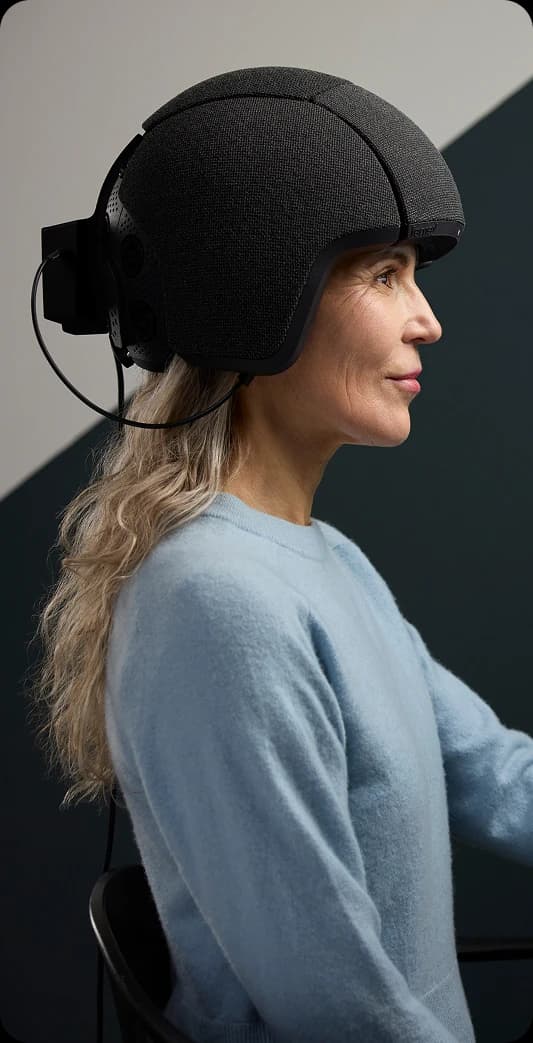
Kernel’s design language occupies a rare space — scientific visualization meets consumer product design. The site presents the Kernel Flow headset not as a medical device but as a piece of considered industrial design, photographed with the reverence typically reserved for luxury electronics. Clean sans-serif typography carries technical specifications without clinical coldness, while product imagery uses dramatic lighting to reveal the headset’s geometry: the array of time-domain near-infrared spectroscopy modules, the ergonomic crown, the deliberate matte-black finish.
The data visualization work is where the design truly distinguishes itself. Neural activity maps rendered in precise color gradients, brain region diagrams with clinical accuracy but editorial presentation, signal quality charts that read more like abstract art than medical data. Every visual asset serves a dual purpose — communicating real science to researchers while creating visual intrigue for a broader audience.
This duality is the hardest thing to capture in a static rebuild. The site’s success depends on the tension between approachability and authority — too polished and it feels like vaporware, too clinical and it loses the consumer audience. Kernel threads this needle through restraint: generous whitespace, a near-monochromatic palette with selective blue accents, and typography that lets the product photography do the heavy lifting.




Gatsby Architecture
Gatsby generates static sites with a distinctive asset fingerprinting pattern — every image, font, and stylesheet lives under /static/ with a content-hash filename. This means URLs are unpredictable and change with every build, making our standard URL-pattern-based discovery less effective. The initial capture identified all asset URLs correctly, but the CDN serving Kernel’s static assets enforced aggressive rate limiting that caused 69 downloads to fail on the first pass.
We adapted our capture strategy specifically for Gatsby’s architecture. Rather than parallel bulk downloads, we implemented sequential requests with exponential backoff, respecting the CDN’s rate limits while ensuring every asset eventually landed. The /static/hash/ path pattern actually simplified deduplication — each unique hash guaranteed a unique asset, eliminating the redundant downloads that plague sites with multiple URL paths pointing to the same file.
The result was a complete capture of Kernel’s visual identity: product photography of the Flow headset from every angle, neural data visualizations, scientific diagrams, and the full typographic system. The rate-limiting challenge forced us to build more resilient download logic that subsequently improved our pipeline for all future captures — a case where a difficult site made our tooling better for every site that followed.




Navigated Gatsby’s unique static asset hash structure and rate-limited CDN delivery to achieve a comprehensive capture of Kernel’s scientific design language — product photography, data visualization imagery, and the restrained typography that bridges hard science and consumer approachability.